Share this tour




Offered languages
- English
Explore the beauty, history, and culture of Barbados on a wonderful island adventure. Begin by visiting the street where international superstar Rihanna once lived and see the exterior of her former home. Continue along the East Coast, stopping at Cherry Tree Hill for breathtaking views and viewing historic Morgan Lewis Windmill.
Travel through Cattlewash to Bathsheba, famous for its stunning natural beauty and legendary Soup Bowl, a favorite surfing spot. Visit St. John’s Church, one of Barbados’ oldest churches, dramatically perched on a cliff overlooking the coast. Journey through St. George before exploring the historic Garrison, established by the British in 1705 and deeply connected to Barbados’ independence.
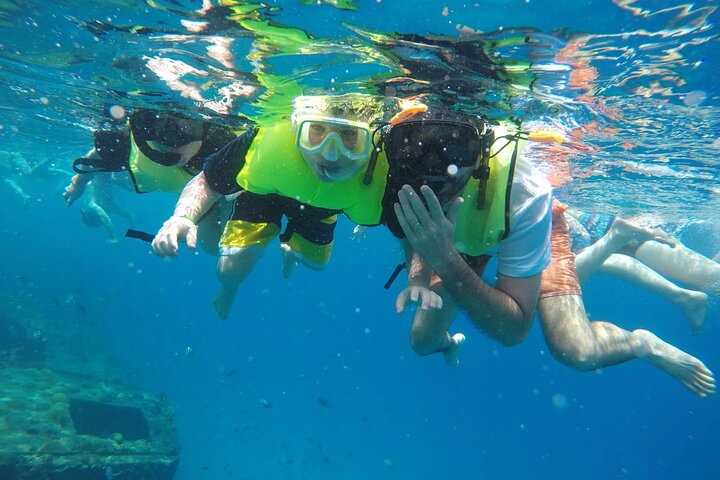
Next, enjoy a boat trip where you can swim with sea turtles and snorkel around a shipwreck. Please wear your swimsuit and bring a beach towel. Finish your day with a drive through Bridgetown, Barbados’ capital and a UNESCO World Heritage Site, before returning to the port.
What's Included
Meeting and pickup
Your tour will depart from Tour Departure Gate One (1), located within the cruise terminal.
Depending on where your cruise ship is docked, you will most likely need to take a shuttle bus from your ship to the cruise terminal. Once you exit the terminal doors, you will arrive at the designated tour gate and bus-loading departure area.
Look for the “Beautiful Barbados Tours” sign at Gate One (1). One of our representatives will be there to welcome you and assist with check-in. After checking in, our representative will direct you to your tour guide and tour vehicle.
Please arrive at the designated departure location at least ten (10) minutes before your scheduled departure time. This will allow sufficient time for check-in and boarding and help ensure a smooth and timely departure.
Itinerary
-
1
Visit Rihanna Drive, the neighborhood street in Bridgetown where internationally renowned singer and entrepreneur Rihanna spent part of her childhood. Guests can see the exterior of the modest home where she lived before rising to global fame and learn about her journey from a young girl in Barbados to one of the world’s most successful music and business icons. This stop offers a unique connection to Barbados’ modern culture and celebrates the island’s contribution to the global entertainment world. It is a memorable photo opportunity for fans and visitors interested in experiencing a personal piece of Rihanna’s Barbadian roots.
10 minutes • Admission ticket free -
2Cherry Tree Hill
Rising approximately 850 feet above sea level, Cherry Tree Hill offers one of the most breathtaking panoramic views in Barbados. From this scenic vantage point, visitors can admire the rolling landscape of the Scotland District, a unique region that covers much of the parish of St. Andrew. The district is named after Scotland's patron saint because its rugged hills and valleys reminded early Scottish settlers of their homeland. It is believed that the name Cherry Tree Hill originated from the abundance of cherry trees that once grew in this area. Today, the road is lined with majestic West Indian mahogany trees, introduced to Barbados following the Treaty of Paris in 1763. As the journey descends upon the hill, the towering mahogany gradually gives way to expansive fields of swaying sugar cane, creating one of the island's most picturesque and memorable landscapes.
10 minutes • Admission ticket free -
Morgan Lewis Sugar Mill (Pass by)
The historic Morgan Lewis Sugar Mill, built in 1727, is a remarkable symbol of Barbados’ rich sugar-making heritage. Once one of many windmills that powered the island’s thriving sugar industry, it is now recognized as one of the last two functioning sugar windmills in the world. The mill continued grinding sugarcane for commercial production until 1947, when it was entrusted to the care of the Barbados National Trust. Today, this beautifully preserved landmark offers a fascinating glimpse into Barbados’ past, showcasing the impressive engineering behind sugar production and its important role in shaping the island’s history and culture. During this excursion, we make a scenic stop at Morgan Lewis Sugar Mill for photographs and to admire the historic structure, entry to the mill is not included.
Admission ticket free -
3Bathsheba Beach
Bathsheba, located on Barbados’ rugged east coast, is one of the island’s most scenic coastal villages, famous for its dramatic landscapes, powerful Atlantic waves, and distinctive coral rock formations. According to local tradition, the village was named after the biblical Bathsheba, whose legendary milk baths were said to resemble the white, foaming surf at the famous Soup Bowl. Today, Bathsheba is recognized internationally as one of Barbados’ top surfing destinations, attracting surfers from around the world with its strong Atlantic swells. The area is also popular with photographers, sightseers, and nature lovers who come to admire its breathtaking coastline and refreshing ocean breezes. Despite its popularity, Bathsheba has preserved the charm of a traditional Barbadian fishing village, with colorful seaside cottages and a peaceful atmosphere that showcases the island’s natural beauty and cultural heritage.
15 minutes • Admission ticket free -
4St. John's Parish Church
Worship at St. John’s Parish Church has taken place on this site since 1645, making it one of Barbados’ oldest Anglican places of worship. The original wooden church was destroyed by fire in 1676 and replaced with a stone structure. After suffering damage from the hurricanes of 1780 and 1831, the present church was built in 1836 and remains an important center of faith and heritage. The churchyard is also the final resting place of Fernando Paleologus, a former church warden and planter who died in 1670. A descendant of the Byzantine imperial family, Paleologus was related to the brother of Emperor Constantine XI, the last emperor of Constantinople. After his family lost the throne to the Turks, he settled in Barbados. Originally buried beneath the choir, his tomb was moved to the churchyard after the 1831 hurricane. Today, St. John’s offers a fascinating connection to Barbados’ religious, architectural, and international history.
20 minutes • Admission ticket free -
5Garrison Savannah - Barbados Turf Club
The Garrison Historic Area is one of Barbados’ most important heritage sites, with origins in the seventeenth century when British forces used the island as a strategic military base. To reduce the burden of housing soldiers, Barbados requested a permanent garrison, which was approved in 1780. Construction began near Charles Fort and St. Anne’s Castle, and the site expanded from 16 to 64 acres, becoming the largest British garrison in the Caribbean. Many buildings were made with London bricks carried as ship ballast, and about 60 original structures remain. The Garrison Savannah evolved into a military parade ground, the birthplace of cricket in Barbados, and a famous horse racing venue. On November 30, 1966, Barbados gained independence under Premier Errol Walton Barrow at the Garrison. Today, it remains a symbol of the island’s military history, culture, and national heritage.
10 minutes • Admission ticket free -
6
Set sail with Tranquility Cruises for an unforgettable Turtle and Shipwreck adventure along the beautiful coastline of Barbados. Enjoy a comfortable cruise featuring spacious decks, onboard washrooms, a bar, glass-bottom viewing area, and seating for relaxation. Explore the underwater world with provided snorkel gear, masks, and life vests as you discover a historic shipwreck, swim with sea turtles, and admire colorful tropical fish. Children can enjoy the onboard waterslide for added fun. Departing from Carlisle Bay, a stunning coastal destination known for calm turquoise waters and vibrant marine life, this 80-minute cruise offers the chance to explore the famous marine park, home to shipwrecks, turtles, rays, seahorses, and other fascinating creatures. Every trip offers a unique experience, as marine life sightings may vary. All visitors must complete a liability waiver before boarding the vessel.
1 hour 20 minutes • Admission ticket included -
Bridgetown (Pass by)
On 5 July 1628, sixty-four settlers led by Charles Wolverstone arrived in Barbados and chose Bridgetown as the best location for a port, despite its unhealthy swampy land. The town was named after the Indian Bridge, built by the Amerindians. John Swan planned Bridgetown's main streets, with Swan Street named after him, and Broad Street named for its width. Early streets were poorly maintained, so a 1656 law fined property owners 100 pounds of sugar if they failed to keep the area clean. The swamp was later filled and replaced by a canal called the Careenage, where ships were repaired by careening.
Admission ticket free
Additional info
- Specialized infant seats are available
- Not recommended for travelers with spinal injuries
- Travelers should have at least a moderate level of physical fitness
- Children must be accompanied by an adult at all times.
- A minimum of two adults is required for this tour to operate.
- Cruise ship passengers must provide their cruise ship name, docking time, disembarkation time and all-aboard time when booking.
Additional info
- Specialized infant seats are available
- Not recommended for travelers with spinal injuries
- Travelers should have at least a moderate level of physical fitness
- Children must be accompanied by an adult at all times.
- A minimum of two adults is required for this tour to operate.
- Cruise ship passengers must provide their cruise ship name, docking time, disembarkation time and all-aboard time when booking.
- This activity is not suitable for non swimmers.
- Before your boat cruise enjoy some free time at Savvy on the Bay, a lively beachfront destination featuring a beach bar and food truck park, the time is yours to enjoy however you choose. Take a refreshing swim, relax on the beach or rent a beach chair, grab a delicious bite from one of the food trucks, or simply sit back with a drink and enjoy the laid-back island atmosphere.
- Motion Sickness & Vehicle Cleaning Policy If you are prone to motion sickness, we recommend taking appropriate precautions before your tour and informing your guide in advance. Please be aware that some of our island roads can be winding and bumpy, which may contribute to motion sickness. We understand that motion sickness can occur unexpectedly, and our team will do its best to ensure your comfort. However, we must also consider the comfort of other guests and maintain the cleanliness of our vehicles. Should vomiting occur inside the vehicle and professional cleaning be required, the guest responsible will be required to reimburse the driver for cleaning before the end of the tour.
- Not recommended for guests with limited mobility or anyone who has difficulty climbing stairs or walking on uneven surfaces.
Tags
Cancellation Policy
For a full refund, cancel at least 24 hours before the scheduled departure time.
Cancellation Policy
- For a full refund, you must cancel at least 24 hours before the experience’s start time.
- If you cancel less than 24 hours before the experience’s start time, the amount you paid will not be refunded.
- Any changes made less than 24 hours before the experience’s start time will not be accepted.
- This experience requires a minimum number of travelers. If it’s canceled because the minimum isn’t met, you’ll be offered a different date/experience or a full refund.
- This experience requires good weather. If it’s canceled due to poor weather, you’ll be offered a different date or a full refund.
Rating

You can cancel up to 24 hours in advance of the experience for a full refund.
Your guide to the flawless travel experience
Popular Countries
Get our app

