Share this tour




Offered languages
- Japanese
- English
Discover the authentic heart of Osaka with a private, fully personalized walking tour tailored to your interests. This isn’t just about visiting landmarks—it’s about immersing yourself in Osaka’s vibrant culture alongside a passionate local host who shares insider tips, personal stories, and unique insights.
Uncover hidden gems like Hozenji Yokocho alleyway, admire the grandeur of Osaka Castle, or soak in the energy of Dotonbori’s neon-lit canal. Whether you're a history buff, a shopping enthusiast exploring Shinsaibashi-suji, or an art lover drawn to Nakanoshima Park, your host will craft the perfect itinerary for you.
Before you meet, you'll receive a short Personalization Form so we can tailor the experience to your interests and pair you with a licensed local guide. The true luxury is having their expertise and undivided attention, with the flexibility to explore at your own pace and focus on what interests you most.
What's Included
Meeting and pickup
This is a private walking tour. Your host will meet you at your chosen hotel, or you can select the central meeting point instead, which we recommend for the best overall experience. If your hotel isn’t listed, please choose the central landmark option. No private vehicle is included.
This is a private walking tour. Your host will meet you at your chosen hotel, or you can select the central meeting point instead, which we recommend for the best overall experience. If your hotel isn’t listed, please choose the central landmark option. No private vehicle is included.
Itinerary
-
Osaka (Pass by)
Experience Osaka through the eyes of a local as you explore Japan's great merchant city, where centuries of commerce, celebrated food culture, historic landmarks, and unmistakable local character have shaped one of the country's most dynamic destinations. Before your experience begins, you'll complete an online Personalization Form, allowing your host to tailor the day around your interests, whether you're passionate about history, architecture, food, local culture, hidden neighborhoods, or Osaka's iconic sights. Every experience is thoughtfully personalized, allowing your route to evolve naturally throughout the day based on your interests, the duration selected, the season, weather conditions, and local crowd levels. Here are some of the places your personalized experience may include:
Admission ticket free -
Namba (Pass by)
For centuries, Namba has been one of Osaka's busiest gathering places. Today, its lively shopping arcades, entertainment streets, and famous food scene make it the energetic heart of the city and the perfect introduction to Osaka's unmistakable character.
Admission ticket free -
Dotonbori (Pass by)
Dotonbori has entertained visitors for more than 400 years. Once a theatre district, it is now famous for its neon billboards, canal, and legendary street food, capturing the lively spirit that has earned Osaka the nickname "Japan's Kitchen."
Admission ticket free -
Ebisu Bridge (Pass by)
Cross one of Osaka's best-known bridges, where generations of merchants and visitors have gathered. Overlooking the Dotonbori Canal and the famous Glico sign, it remains one of the city's most photographed landmarks.
Admission ticket free -
Hozenji Yokocho (Pass by)
Hidden just behind Dotonbori, this narrow stone alley preserves the atmosphere of old Osaka. Traditional restaurants, lantern-lit pathways, and historic buildings offer a striking contrast to the city's modern skyline.
Admission ticket free -
Hozen-ji Temple (Pass by)
Beside the alley stands Hozenji Temple, famous for its moss-covered statue of Fudo Myoo. Visitors have poured water over the statue while praying for decades, creating one of Osaka's most distinctive and photographed spiritual landmarks.
Admission ticket free -
Kuromon Market (Pass by)
Serving Osaka for nearly 200 years, Kuromon Market is known as "Osaka's Kitchen." Fresh seafood, seasonal produce, and regional specialties reflect the city's long-standing reputation as one of Japan's greatest culinary destinations.
Admission ticket free -
(Pass by)
Originally known for electronics, Den Den Town has grown into Osaka's centre for anime, manga, gaming, and Japanese pop culture. Its specialist stores and themed cafés make it a favourite destination for enthusiasts from around the world.
Admission ticket free -
Shinsaibashi-suji Shopping Street (Pass by)
Stretching almost 600 metres beneath a covered arcade, Shinsaibashi-suji has been one of Osaka's busiest shopping streets since the Edo Period. Historic merchants now stand alongside modern retailers, reflecting the city's commercial heritage.
Admission ticket free -
America-mura (Pass by)
Known locally as Ame-mura, this neighbourhood became the centre of Osaka's youth culture during the 1970s. Street art, vintage fashion, independent cafés, and music venues continue to give the district its distinctive creative identity.
Admission ticket free -
Shinsekai (Pass by)
Built in the early twentieth century as a vision of the future, Shinsekai now celebrates Osaka's nostalgic side. Retro arcades, colourful signs, and local eateries preserve an atmosphere that has changed remarkably little over the decades.
Admission ticket free -
Tsutenkaku (Pass by)
Towering above Shinsekai since 1912, Tsutenkaku has become one of Osaka's enduring symbols. Inspired by the Eiffel Tower, it reflects the city's early embrace of modern engineering and is closely linked with Billiken, the local symbol of good fortune.
Admission ticket free -
Tennoji Park (Pass by)
Tennoji Park offers a peaceful contrast to Osaka's bustling streets. Landscaped gardens, open lawns, and seasonal scenery surround several of the city's cultural landmarks, making it a favourite place for both locals and visitors to unwind.
Admission ticket free -
Shitennō-ji (Pass by)
Founded in 593 by Prince Shotoku, Shitennoji is considered Japan's oldest officially established Buddhist temple. Its elegant pagoda and peaceful grounds provide a fascinating glimpse into the origins of Japanese Buddhism. Separate admission applies to some areas.
Admission ticket free -
Abeno Harukas (Pass by)
Standing 300 metres tall, Abeno Harukas transformed Osaka's skyline when it opened. Visitors can enjoy impressive city views from its public spaces, while the observation deck is available separately for those wishing to experience panoramic views.
Admission ticket free -
Nakanoshima Park (Pass by)
Situated between the Dojima and Tosabori Rivers, Nakanoshima Park reveals a more elegant side of Osaka. Historic civic buildings, graceful bridges, and seasonal rose gardens highlight the city's development as a centre of commerce and culture.
Admission ticket free -
(Pass by)
Completed in 1918, this striking Neo-Renaissance landmark reflects Osaka's prosperity during the early twentieth century. Its distinctive red-brick façade and beautifully restored interiors make it one of the city's architectural highlights.
Admission ticket free -
Osaka Tenmangu Shrine (Pass by)
For more than 1,000 years, Osaka Tenmangu Shrine has honoured Sugawara no Michizane, Japan's deity of learning. It is also home to the famous Tenjin Matsuri, one of the country's three great festivals.
Admission ticket free -
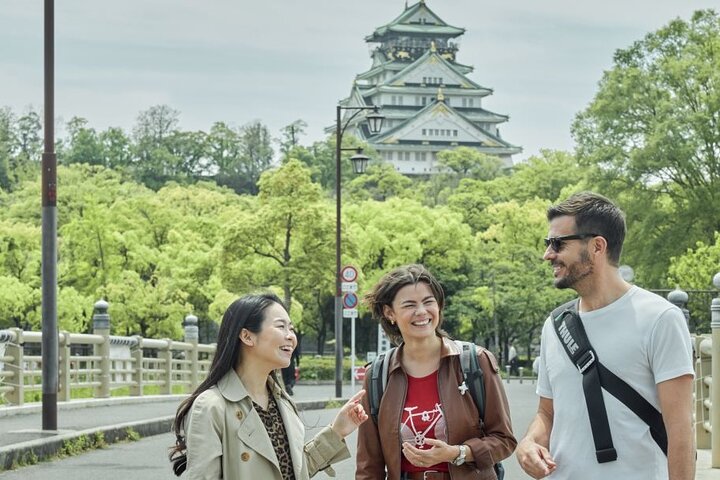
Osaka Castle (Pass by)
Originally built by Toyotomi Hideyoshi in the sixteenth century, Osaka Castle played a pivotal role in Japan's unification. Today, its impressive stone walls, expansive parkland, and iconic keep remain among the city's most celebrated landmarks. Separate admission applies to the museum.
Admission ticket free -
Osaka Museum of Housing and Living (Pass by)
Experience daily life in Edo-period Osaka through detailed reconstructions of streets, homes, and merchant shops. This immersive museum offers a fascinating look at the city's past for visitors wishing to explore its exhibitions with separate admission.
Admission ticket free
Additional info
- Service animals allowed
- Public transportation options are available nearby
- Suitable for all physical fitness levels
- This is a private City Unscripted experience: real people, real connections
- After booking, you'll receive a short online Personalization Form to share your interests, preferences, and must-sees. Your City Unscripted guide will personally reach out to craft a fully customized itinerary that suits your style—whether you love history, food, hidden gems, or cultural experiences.
- This private tour is a walking experience. A private vehicle is not included.
Additional info
- Service animals allowed
- Public transportation options are available nearby
- Suitable for all physical fitness levels
- This is a private City Unscripted experience: real people, real connections
- After booking, you'll receive a short online Personalization Form to share your interests, preferences, and must-sees. Your City Unscripted guide will personally reach out to craft a fully customized itinerary that suits your style—whether you love history, food, hidden gems, or cultural experiences.
- This private tour is a walking experience. A private vehicle is not included.
- Public transportation or local taxis may be used to transfer between sites. Exact transportation costs can be discussed with your host after your reservation is finalized.
Tags
Cancellation Policy
For a full refund, cancel at least 24 hours before the scheduled departure time.
Cancellation Policy
- For a full refund, you must cancel at least 24 hours before the experience’s start time.
- If you cancel less than 24 hours before the experience’s start time, the amount you paid will not be refunded.
- Any changes made less than 24 hours before the experience’s start time will not be accepted.
Rating

You can cancel up to 24 hours in advance of the experience for a full refund.
Your guide to the flawless travel experience
Popular Countries
Get our app

