Share this tour






Offered languages
- English
Visit the ancient Greek ruins in Delphi, enjoy the sunset in Meteora, admire the beauty of Ohrid Lake, be amazed by the Queen of the Danube; Budapest and outstanding architecture of Subotica. This grand tour of the Balkans and Central European countries combines some of the most charming capitals, once part of the Austro-Hungarian empire, with the diversity and the uniqueness of the Balkans.
What's Included
Breakfast
Meeting and pickup
After having experienced the capital of Greece and cultural capital of Europe, Athens (by yourself), our tour leader will come and pick you up at your hotel in Athens.
Itinerary
-
1Athens
After having experienced the capital of Greece and cultural capital of Europe, Athens (by yourself), our tour leader will come and pick you up at your hotel in Athens
30 minutes • Admission ticket free -
2Delphi
We will begin this amazing journey by driving towards Delphi, UNESCO world heritage site. This ancient Greek archaeological site is considered to be one of the most beautiful in the world, including multiple monuments such as the Temple of Apollo, the Castallian Fountain and the Large Sphynx of Naxos. You will be astonished by Treasury of the Athenians, the Theatre, the Stadium and the Museum with the famous statue of Antinoos and the unique bronze statue of the Charioteer dated from 475 B.C.
1 hour • Admission ticket free -
3Meteora
After we will drive towards Meteora, also part of UNESCO world heritage dating back in the 14th – 15th century. The monasteries are built on top of the spectacular rock formations, creating a beautiful and impressive sight. Get ready to witness one of the best and stunning sunsets you have ever experienced. As the sun continues to sink, the sky above Meteora is painted with a vivid array of colors. Truly, one in a lifetime experience.
2 hours • Admission ticket free -
4Ioannina
Our first destination for today would be Ioannina, known for its rich history, cultural heritage, and beautiful landscapes. As we wander through the cobbled streets of the old town, you'll be transported back in time. The remains of the Byzantine and Ottoman eras are evident in the architecture, with ancient walls and charming houses.
1 hour • Admission ticket free -
5Ioannina Castle
Our next stop will be the imposing Ioannina Castle, which dates back to the Byzantine era. Within the castle walls, we'll find a labyrinthine network of narrow streets and historic buildings.
1 hour • Admission ticket included -
6Ioannina City Hall
As we wander through the vibrant streets, you'll encounter charming cafes, inviting you to savor traditional Greek cuisine and local delicacies. Have some free time to stroll through the old town of Ioannina.
1 hour • Admission ticket free -
7Gjirokaster
In the afternoon we drive towards the “Stone City”, Gjirokaster.
30 minutes • Admission ticket free -
8Gjirokaster
Today we will visit Gjirokaster, also known as “The Stone City”, part of UNESCO World heritage is situated in Southern Albania on the eastern side of mountain “Mali i Gjere”. Gjirokastra resembles a fortified city where every single house is like a small fortress. The origin of the city starts with the castle of Gjirokastra, built in IV century A.D., and is considered as one of the best-preserved medieval towns in the Balkans. Every five years Gjirokastra becomes the capital of the Albanian folklore and traditional music, where passionate folklore ensembles gather in the “stone city” and perform their traditional music, dances and show off their costumes.
1 hour • Admission ticket free -
9Souvenir Gjirokastra
Right before entering the castle of Gjirokastra you would have to pass by the medieval bazar. The atmospheric old town cascading down in graceful hill crammed with beautiful narrowed stone decorated streets, where you will be amazed by the wide variety of handmade crafts from local artisans and producers.
1 hour • Admission ticket free -
10Skenduli House
We will visit one of the best-preserved houses of Gjirokastra, where everything is totally original and authentic.
1 hour • Admission ticket included -
11
A short drive from Gjirokaster brings us to one of the region’s most enchanting vineyards. At The Barrels, a family-run vineyard and restaurant set among rolling hills and greenery, you can soak in the scenery before enjoying some free time for a meal, a glass of wine, or a leisurely stroll.
1 hour • Admission ticket free -
12Berat
Our next destination after breakfast is Berat, known as the town of 1001 windows, part of UNESCO world heritage. Walking through the narrowed stone streets offers a fantastic view of the medieval old houses, with windows that seem to stand on top of each other.
1 hour • Admission ticket free -
13Berat Castle
The city’s life began in the 6th-5th century B.C. as an Illyrian settlement. Later, in the 3rd century B.C., it was turned into a castle city known as Antipatrea. Uniquely today, residents still live inside of the castle walls. Berat has it all; a beautiful medieval castle, ancient churches and mosques, a lively lower town consisting of grand old houses draped on steep hillsides, an old stone bridge, great museums and remains from the communist era in Albania.
1 hour • Admission ticket included -
14National Iconographic Museum Onufri
Berat is also known as the birthplace of Onufri, the famous painter of churches all-over the Balkans, distinguished for creating a specific reddish colour still difficult to imitate.
1 hour • Admission ticket included -
15Gorica Bridge
We will continue our tour and visit the Gorica Neighbourhood
30 minutes • Admission ticket free -
16Driloni National Park
Today we will cross border towards North Macedonia but not before making a stop at the national park of Drilon. Drilon waters springs form a small lake, surrounded by beautiful greenery that makes a unique oasis of beauty and tranquility. The weeping willow trees by the lake's shoreline creates a soothing ambiance, inviting travelers to relax and absorb the beauty of the park.
1 hour • Admission ticket free -
17Tushemisht
Next, we will stop in Tushemisht, a hidden gem that offers visitors a delightful mix of natural beauty, cultural heritage, and warm hospitality. You will have the chance to meet local street vendors who sell their homemade and handcrafted products, from local preserves, honey, and herbs to beautiful handmade souvenirs. It is a wonderful opportunity to interact with the locals, learn about their traditions, and perhaps pick up a few authentic treats or crafts to take home.
1 hour • Admission ticket free -
18Monastery of Saint Naum
Later we will cross border towards North Macedonia and our first stop will be St Naum. The monastery of St. Naum carries the name of a holy place. It is situated right at the source of River Crni Drim, which flows through Lake Ohrid. This monastery complex is part of the National Park Galicica and belongs to one of the strictly protected areas. Crystal clear, spring water reflects both the surrounding greenery and the mountain peaks in the background.
1 hour • Admission ticket included -
19Ohrid
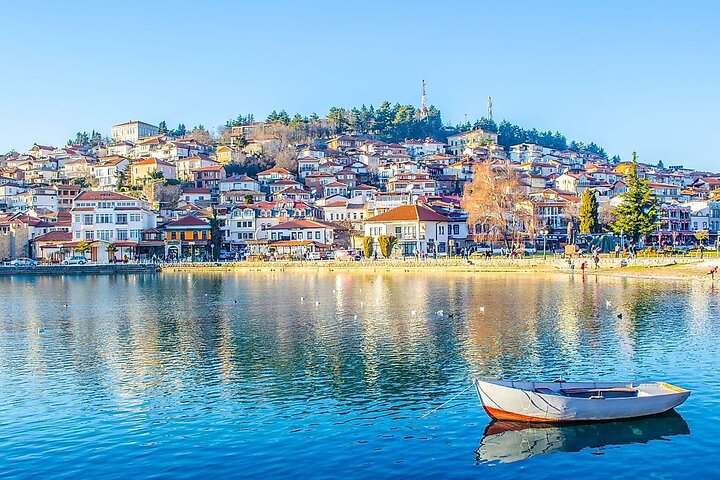
Today we will visit Ohrid, indicated as one of the oldest human settlements in all of Europe. Ohrid city and the Lake are part of UNESCO World Heritage since 1980. The Lake was named by the Romans as “Lyhnidas” (the Light Lake), it’s surroundings where inhabited by the Illyrian Tribe of Enkeleys. We will visit the famous view point of Church of St. John at Kaneo. Ohrid became an important centre for the Orthodox believers during the Byzantine Empire and is famous for its 365 Orthodox churches, said to have one church for each day of the year. During the Ottoman Empire the houses were built with a very specific architecture that created narrowed streets, tunnels and tiny yards on the hilly terrain, making it possible for every house to have a good view of the lake. Today the city is famous for its architecture, the churches, the castle on top of the city, the amphitheatre, the beautiful view of the lake surrounded by mountains and the pearls from the lake.
3 hours • Admission ticket free -
20National Workshop For Handmade Paper
We will also stop at the Paper Museum, one of Ohrid’s most fascinating small museums. Here, you will learn about the ancient art of handmade paper production, crafted using techniques that date back to the time of Gutenberg. You will even have the opportunity to purchase a piece of handmade paper as a unique souvenir, a lasting reminder of your visit.
30 minutes • Admission ticket free -
21Tirana
After we will drive towards Tirana
2 hours • Admission ticket free -
22Tirana
Today we will discover Tirana, the capital of Albania. Meet with your local companion to offer you a unique experience across the city, while passionately sharing our culinary treasures. Make sure to come with an empty stomach and get ready for a delicious adventure.
30 minutes • Admission ticket free -
23Tregu Çam
Our first stop will be at a small local place that only locals know how to find. Here we will have the chance to try Byrek, a classic Albanian specialty made of thin layers of dough filled with cheese, meat, spinach, or other ingredients. The journey then leads towards Çam bazaar, here you can buy all kinds of goods from clothes to kitchen equipment and bargain with the sellers for a cheaper price. With your local companion by your side, you will have an insight into the hidden alleyways and bustling street markets of Tirana. Here you will have the possibility to try fresh, seasonal fruits, vegetables, and other local flavours, while experiencing daily life up close
1 hour • Admission ticket free -
24Tirana
The tour will continue through the charming neighborhoods of Tirana; observe the daily lives of the city's residents, admire colorful buildings, and get a feel for the authentic atmosphere. We will visit a lively market, known for second-hand goods of all kinds. Don’t be shy, explore the market and hunt for any pre-loved item that catches your interest.
1 hour • Admission ticket free -
25Pazari i Ri
The next stop of our local adventure takes us to the New Bazaar, where an array of culinary delights awaits us. We will sit down for a traditional Albanian meal prepared with regional specialties. To wash it all down, we will also taste the famous Albanian Grape Raki. As we Albanians say, there is nothing that Raki can’t fix! Now that you have seen Tirana from a local’s perspective, enjoy some free time to explore the vibrant capital on your own.
1 minute • Admission ticket free -
26Kruje
Our first destination for today will be Kruja, a historical city symbol of the Albanian resistance against the expansion of the Ottoman Empire during the XV century. Kruja is situated in central Albania on a rocky mountainous terrain about 560 meters above sea level, on the slopes of Sarisalltik Mountain.
30 minutes • Admission ticket free -
27Pazari i Vjeter
Walking through the narrow streets and the wooden houses of Kruja’s Medieval Old Bazaar (one of the biggest and oldest in Balkans) gives you a sense of a passage through the history. This is the best place to shop for souvenirs in Albania, from typical to more unique and handmade souvenirs such as carpets, jewelries etc.
1 hour • Admission ticket free -
28Kruja Castle
The castle of Kruja (built during the 5th century A.D.) is strategically placed on the top of a rocky hill, making it difficult for the enemies to attack. The tour leader will take you through some hidden paths, used by the locals to leave the castle without being noticed during periods when the enemies surrounded the castle.
1 hour • Admission ticket included -
29Prizren
We will cross borders towards Prizren, considered as the cultural capital of Kosovo, mixing its rich history, incredible nature, religious tolerance and gastronomic delights. Prizren has played an important role in the region as an Illyrian settlement and a crossroad for the Byzantine and Ottoman empires, contributing to the unique architecture of the city. The river flows through the heart of the old town and under the many bridges that crisscross the city. If you are looking to experience a lively international experience you should visit Prizren during August when the medieval city becomes home to one of the most famous short film festivals in the world named Dokufest. The best way to explore the town is by wandering through the streets passing by elegant medieval houses that fight for your attention. Filigree artisanal techniques for precious metals are Prizren’s joy and pride.
1 hour • Admission ticket free -
30Sinan Pasha Mosque
If you have to choose just one mosque to visit then visit the Sinan Pasha Mosque, rich in arabesque colour and pattern.
30 minutes • Admission ticket included -
31Kalaja Fortress
The view from the fortress on the hill above the town offers a great panorama of this astonishing town. Free afternoon in Prizren.
30 minutes • Admission ticket included -
32Gjakova
After breakfast we will continue our tour towards Gjakova. The city has the oldest and largest bazaar of Kosovo. Even though, it got destroyed during the first Balkan wars, the second world war and the Kosovo war, the bazaar got rebuilt again to its old state and is a nice place to enjoy a meal or to take a look at the stores that sell traditional handmade crafts from local artisans and producers. Don’t hesitate to explore the artisan workshops, where you can watch traditional crafts being made using techniques passed down for centuries.
1 hour • Admission ticket free -
33Decan
Our next destination will be the Monastery of Decan. This one stands out for its white colour, but even more remarkable is the fact that Orthodox monks still inhabit the monastery and make fresh organic food there, such as cheeses. The monastery became part of UNESCO in 2004 because of its frescoes, which portray the lives of people during the 14th century as well as the Palaeologan renaissance that changed the way of Byzantine painting.
1 hour • Admission ticket free -
34Rahovec
Before returning back to Prizren we will drive towards Rahovec Valley, known as the capital city of viticulture in Prizren. There is evidence that in this region grapes have been cultivated since Illyrian times, 2000 years ago. Vineyards are positioned in the soft hillocks of Rahovec in altitude from 350 -520 meters above sea level making Rahovec an ideal spot to produce high quality fine wines. A wine festival takes place in Rahovec annually every September.
1 hour • Admission ticket free -
35Mrizi i Zanave - Restorant Agroturizëm
Our first destination for today is one of the best slow food Agro-tourism farms in the Balkans. We will take a tour around the farm. In addition, we will learn about the story of this farm and how it created jobs for more than 400 people in the surrounding area. The farm collects, elaborates and preserves regional bio fresh local products. We will also learn how this family business adapted some old communist buildings to serve as storage for local-made bio products. You will have some free time to enjoy a traditional lunch or buy some fresh produce products from the farm.
1 hour • Admission ticket free -
36Shkoder
IIn the afternoon we will drive towards Shkodra, situated in the north-western part of Albania, giving its name to the biggest lake in the Balkans. It is one of the oldest cities in Albania, with a history of a thousand years of habitation. We will visit Rozafa castle offering tremendous scenery of the lake and the three rivers melting all together towards the Adriatic Sea. Shkodra’s architecture is a fusion of Illyrian foundations, Ottoman tradition and Venetian elegance.
2 hours • Admission ticket free -
37Venice Art Mask Factory
Most of the guests are surprised to learn that the majority of the Venetian masks are handmade and produced in Shkodra. During our visit, we will stop at the city’s unique Venetian Mask Factory, one of the most fascinating artistic workshops in Albania. Inspired by Venetian traditions, this small factory handcrafts exquisite papier-mâché masks, each one painted and decorated entirely by hand. The vibrant studio is filled with color and creativity, where every mask tells a story, from classic Venetian carnival styles to imaginative modern creations. Overnight in Shkoder.
30 minutes • Admission ticket included -
38Sveti Stefan
Our first destination for today is Budva in Montenegro, before getting there we will make a stop at the view point near Sveti Stefan, historically a fishing town on a small island near the coast. However, nowadays it is not possible to visit the island anymore as it has turned into an exclusive residential resort. Even while standing on the coast, Sveti Stefan is a sight for sore eyes – worth a picture.
30 minutes • Admission ticket free -
39Budva
We will drive towards Budva, a popular tourist destination, famous for its beaches, gorgeous nature and old characteristic buildings. The city is separated between an old and new part. On one hand, in the New Budva, there are many modern buildings, offices, shopping malls, restaurants and bars. On the other hand, in the Old Budva, there is the historical centre and many sights to visit, such as the St. Ivan church, the small church of St. Mary and the medieval splendors of the old town, which we will visit on this tour
1 hour • Admission ticket free -
40Kotor
Today we will head towards Kotor, UNESCO world heritage site. The city is a maze of narrow, cobblestone streets crisscrossing the old town. The intention was to confuse intruders who came to plunder the town, while nowadays it characterizes the city. Many of the old buildings and churches have small plaques on it with their dates of construction and original use. We will visit the Saint Luke’s church which has a great significance for the locals because it represents unity to them.
1 hour • Admission ticket free -
41Blagaj
From Montenegro, we will cross the border to Bosnia & Herzegovina and we will visit Blagaj, a little bit outside of Mostar. On the foot of a cliff, with beautiful blue waters in front of it, Blagaj is a small Ottoman medieval town with its stunning nature and imposing spring of river Buna.
30 minutes • Admission ticket free -
42Mostar
Later head towards the city of Mostar. Our first stop will be the iconic Old Bridge also known as Stari Most, part of UNESCO world heritage and built in a typical Islamic architectural style in the 16th century. We will also wander through the Old Bazaar with its colourful streets and lively atmosphere. The city has stones with “Don’t Forget” all around the town, commemorating the city’s history. Mostar combines the old with the new, which you will notice while wandering through the streets.
1 hour • Admission ticket free -
43Biscevica Kuca (Biscevic House)
We will also visit the Bišćevića Kuća, one of the finest examples of Ottoman residential architecture in the region. Built in the 17th century and beautifully preserved, this riverside house offers an intimate glimpse into the lifestyle of a wealthy Ottoman family
30 minutes • Admission ticket included -
44Sarajevo
After breakfast we will drive from Mostar to our next destination Sarajevo, the capital of Bosnia and Herzegovina. Today’s itinerary includes walking on uneven terrain, while visiting some of the ruins during our Sarajevo tour. You can still see many reminders of the Yugoslav War in bullet holes and cannon marks all around town. The tour will cover the stories of origins of Sarajevo and the medieval Bosnian Kingdom. We will visit the Ottoman and Austria-Hungarian parts of Sarajevo, which both with its stunning markets, bazaars, mosques, churches and synagogues will reveal the true nature of the real European Jerusalem.
1 hour • Admission ticket free -
45Latin Bridge
We’ll make sure to visit the Latin Bridge and learn the story about how WWI was triggered right here, in the heart of Sarajevo. The bridge received its name because it connected the right bank of the Miljacka with the Catholic quarter of the city, which was informally called "Latinluk" in Ottoman times.
1 hour • Admission ticket free -
46Sarajevo
We will finish the tour at Caffe Divan to enjoy the famous Turkish coffee or tea, offered to you as a complimentary treat from us. It is an ideal moment to unwind and take in the local atmosphere. In the evening, enjoy a leisure stroll through the charming streets of the city. You can enjoy dinner at one of the many restaurants offering local dishes.
1 hour • Admission ticket free -
47Zvornik
Our main destination for today is Belgrade in Serbia. Before reaching Belgrade, we will have a stop in Zvornik, situated along the banks of the serene Drina River. Zvornik is a captivating town that seamlessly blends history, culture, and natural beauty. The town offers a unique experience for both travelers seeking historical insights and those yearning for a tranquil escape. Have some free time to have lunch and try the local dishes or simply walk around the he charming streets of Zvornik.
3 hours • Admission ticket free -
48Belgrade
After our break, we’ll continue our journey toward Belgrade. As the day transitions to evening, step out and embrace the charm of Belgrade. Stroll through the vibrant streets of the city, where historical architecture meets modern energy. Do not miss a leisurely walk through the pedestrian-friendly areas like Knez Mihailova Street or the bohemian Skadarlija district. You can enjoy dinner at one of the many local restaurants.
2 hours • Admission ticket free -
49The Belgrade Fortress
Today, we will set out to explore Belgrade, the vibrant capital of Serbia, known for its rich history, dynamic culture, and lively atmosphere. Our first stop will be the Belgrade Fortress and Kalemegdan Park, majestically perched at the confluence of the Sava and Danube rivers. The fortress offers a breathtaking panoramic view of the city and rivers, providing a perfect photo opportunity.
30 minutes • Admission ticket free -
50Kalemegdan Park and Belgrade Fortress
In the Upper Town of the fortress, we will visit the iconic Pobednik Monument, a symbol of Belgrade’s resilience and history dating back to 1913. Surrounding the fortress, Kalemegdan Park stretches over a vast area with shaded paths, lush greenery, and peaceful corners that contrast beautifully with the bustling city below. It is a favorite spot for locals and visitors alike to relax, stroll, and enjoy the scenery.
30 minutes • Admission ticket free -
51Knez Mihailova
From the fortress, we will continue along Knez Mihailova Street, the social and cultural heart of Belgrade. This pedestrian-friendly street is lined with elegant historic buildings, charming cafes, boutiques, and galleries. It is a lively meeting point for locals and a great place to soak in the city’s energy.
1 hour • Admission ticket free -
52Republic Square
Our walk will bring us to Republic Square, the central hub of Belgrade, surrounded by key landmarks, including the National Museum and the National Theatre. Here, you can admire the city’s blend of architectural styles and feel the pulse of everyday life in Serbia’s capital.
30 minutes • Admission ticket free -
53Sremski Karlovci
After breakfast in Belgrade, we will drive towards Sremski Karlovci, the center of Serbian culture in the 18th century and famous for the well-respected wine cellars. Sremski Karlovci is a real gem of Serbian culture and spirituality, which feels like a ‘museum town’ with its Baroque center. The town has its own legend which claims that whoever drinks from the Four Lions fountain located in the city center will surely return to Karlovci and get married there. Before leaving Sremski Karlovci, we will make sure to savor the region’s delicate wines, sampling the flavors that have made this area famous for centuries. A short drive will takes us to a hilltop vineyard, offering panoramic views similar to Tuscany. During the visit, enjoy a tour of the vineyard, cellars and a tasting of one wine from their collection of nine labels
2 hours • Admission ticket free -
54Novi Sad
Our journey then takes us to Novi Sad, considered to be the cultural capital of northern Serbia. Located on the historical border of two former empires – the Austro-Hungarian and Ottoman, as a result you will be able to distinguish among the mixture of melting cultures influencing the town through centuries. You will immediately notice the Austro-Hungarian as well as the Ottoman influences. The town has a unique Baroque architecture characterizing some of its most important buildings. Not to be missed is the Petrovaradin Fortress also known as the Gibraltar on the Danube.
2 hours • Admission ticket free -
55Subotica
Today we will drive towards Subotica our last destination in Serbia. Rich cultural heritage assets, intricately decorated buildings, multicultural spirit and European charm – these are the features that make this city distinctive. In Subotica, you will be eye-full of the vibrant colors, and outstanding architecture of the city due to its once importance and wealth during the Austro-Hungarian empire. We will visit the center of Subotica which is not dominated by a cathedral or a church, but by the City Hall. It is surrounded by the park, fountains and a huge square. Subotica is known for its relaxed atmosphere, good food, and quality wines. After a walk through the city center, enjoy time to explore Subotica’s streets and squares and taste the far-known local cuisine. We will visit the Cathedral of St. Teresa of Avila and the Synagogue.
2 hours • Admission ticket free -
56Budapest
Later this day we will cross border towards Budapest the Capital of Hungary. Upon arrival, enjoy an afternoon at leisure to start discovering this dynamic city. If you are a music lover, don’t miss the opportunity to explore Budapest’s vintage record stores and browse through collections of vinyls and cassette tapes. For a relaxing experience, you can also visit one of Budapest’s famous thermal baths, such as Széchenyi or Gellért, and unwind in the historic, naturally heated pools.
30 minutes • Admission ticket free -
57Budapest
Today we will explore the “Queen of the Danube”, Budapest. This scenic city is known for its singular mix of Baroque, Neoclassical and Art Nouveau architecture. The capital of Hungary is divided by the Danube into two parts: traditional "Buddha" and cosmopolitan "Pest". Budapest offers an unmatched combination of culture and tradition. We will pass by the Saint Stephen’s Basilica, the largest church in Budapest with neoclassical style. After we will stroll along the boulevards, the Opera, the Parliament building, Heroes' Square, and the 19th-century Fisherman's Bastion with its spectacular views over the city
1 hour • Admission ticket free -
58Buda Castle
We will learn more about the historical and cultural significance of the Hungarian capital by visiting the Buda Castle, a UNESCO World Heritage Site and symbol of the city.
1 hour • Admission ticket included -
59Budapest
We will cross over bridges and discover the Baroque-style Street. You can't miss Budapest at night when the city dresses up, free evening to explore on your own this amazing city, and take in the atmosphere.
1 hour • Admission ticket free -
60Danube River
In the afternoon, we have booked for you the iconic Danube cruise. You will be sailing past Budapest’s stunningly illuminated monuments and watching the city shimmer along the river, a magical way to see both Buda and Pest. After the cruise, you will have some free time to explore the city on your own and soak in the vibrant nighttime atmosphere.
1 hour • Admission ticket free -
61Gyor
Today we will continue our journey towards the picturesque “City of Rivers”, Győr. The city is filled with a rich history, baroque architecture and tasty Hungarian food. The center of the city is surrounded with multi-color homes and churches.
30 minutes • Admission ticket free -
62Gyor Town Hall
We will wander the historic streets and visit the Györ’s Town Hall where you cannot miss the 59-meter tower and its green top. This Neo-Classical building has been open since 1898. Győr has many churches all around the town, however, do not miss a visit to Cathedral of The Virgin Mary which was built in Roman style in the 11th century
1 hour • Admission ticket free -
63Gyor
After we will walk towards Györ Synagogue, its colossal grey dome can be spotted from far away. The architecture of this building was used as an inspiration for other synagogues across all central Europe. We will walk along the pedestrian-only street Baross Gabor. The street is filled with numerous cafes, shops, bars, and restaurants. Have some free time to taste the delicious Hungarian food and the famous blueberry beer.
1 hour • Admission ticket free -
64Bratislava
Later we will drive towards Bratislava
1 hour • Admission ticket free -
65Bratislava
After breakfast we will visit Bratislava, a charming city alongside the Danube. Exploring the medieval Old Town Hall, we will learn more about the ancient history of Slovakia. Bratislava's Old Town is known for its many churches and cultural institutions, it is also the location of most of the foreign states embassies and important Slovak institutions.
1 hour • Admission ticket free -
66Michael's Gate
We will head to Michael's Gate, the only gate that has been preserved from the medieval fortifications, and it ranks among the oldest of the town's buildings.
30 minutes • Admission ticket free -
67Bratislava Castle
After exploring the old town, we will walk up to the iconic Bratislava Castle, overlooking the city. The castle was built in 9th century and it stands on the hill above Danube River. The view from the castle offers an amazing spot worth a picture of Bratislava. In the afternoon we will return to the city center
1 hour • Admission ticket included -
68Petrzalka
In the afternoon, we will cross the Danube to visit the Petržalka neighborhood. Once a showcase of communist urban planning, Petržalka offers a striking insight into how life looked under socialism. Here, you will see the immense rows of concrete apartment blocks where thousands of residents lived very differently from those in the historic city center
30 minutes • Admission ticket free -
69Bratislava
As you explore the neighborhood, you will learn how these planned communities functioned during the communist era, revealing a side of the city far from the usual tourist sights. Later, we return to the city center, where Bratislava’s café culture awaits. Enjoy some free time to relax and try the city’s famous coffee in one of its traditional coffee houses, where the aroma of freshly roasted beans fills the air.
30 minutes • Admission ticket free -
70Vienna
This is the last day of your Balkan to central Europe adventure marking the end of this amazing experience through the rich history and culture of this part of the World. Your tour leader will drop you off at your hotel in Vienna (Austria). We hope this has been a wonderful experience with great memories through the Balkan countries and Central Europe.
30 minutes • Admission ticket free
Pickup in Athens (Greece) – Delphi – Meteora (Kalabaka)
Meteora – Ioannina – Gjirokaster (Albania)
Day tour of Gjirokaster
Gjirokaster – Berat
Berat – Drilon – Tushemisht (Albania) – St. Naum (N. Macedonia) – Ohrid
Ohrid (N. Macedonia) – Tirana (Albania)
Local Food and Walking of Tirana
Tirane – Kruje – Prizren (Kosovo)
Prizren – Gjakove - Decan – Vineyards near Rahovec – Prizren
Prizren – Mrizi i Zanave Agro Tourism – Shkoder (Albania)
Shkoder – Sveti Stefan (Montenegro) – Budva – Montenegrin Riviera
Montenegrin Riviera – Kotor – Mostar (Bosnia and Herzegovina)
Mostar – Sarajevo
Sarajevo – Zvornik – Belgrade (Serbia)
Day Tour of Belgrade
Belgrade – Wine Tasting in Sremski Karlovci – Novi Sad
Novi Sad – Subotica– Budapest (Hungary)
Day tour of Budapest with Danube Cruise
Budapest – Győr – Bratislava (Slovakia)
Day tour of Bratislava
Bratislava (Slovakia) – Transfer day to Vienna (Austria)
Additional info
- Travelers should have a high level of physical fitness
- If you have enjoyed your experience, tipping is a wonderful way to show gratitude for your tour leader / driver efforts and dedication
- lease note that prices are calculated on double/twin/triple/quadruple room occupancy in a 3 stars hotel accommodation.
- Single room occupancy is possible on 45 Euros extra charge per night per person in a 3 stars hotel accommodation.
Tags
Cancellation Policy
All sales are final. No refund is available for cancellations.
Cancellation Policy
This experience is non-refundable and cannot be changed for any reason. If you cancel or ask for an amendment, the amount you paid will not be refunded.
Rating

You will not receive a refund if you cancel.
Your guide to the flawless travel experience
Popular Countries
Get our app

